The Headmistress has
two posts on
dolls, which mainly focus on whether a store-bought doll is a want or a need. It has brought to mind all the ways my girls have played with dolls.
At the age of four, Triss was given homemade paper dolls by some older homeschooled girls as a birthday present. Very sweet. The dolls were self-portraits, and as Triss loved these girls very much, she loved their paper doll counterparts as well. (Fa and Beatrice, do you remember that? She still has those dolls in a box somewhere!) Triss was not a doll-y girl, and I had always been puzzled that she did not play with her one baby doll, a gift given to her at the age of one. But now her creativity was sparked, and she began hauling large sheets of construction paper out of the art drawer. She made almost lifesize "closet dolls." These were dolls made out of a sheet of construction paper for a head, another for the body, and construction paper strips for arms and legs. She taped them to the inside of her closet and disappeared for hours, having long conversations with those dolls. For months. Even after she had moved on from those dolls, about two years later, she got very upset with me for taking them down as I prepared to move our third daughter (a newborn at the time) into the room with Triss and Mariel.
Also around this time, Mariel and Triss were given very large rag dolls bought at Eckerd. These inexpensive dolls are similar to giant Raggedy Ann's or Hollie Hobbies, but not as distinctive. They are drug store rag dolls and that is what they look like. But those two girls just love Molly and Amanda and wouldn't trade them for the world. They still use them as "extras" in their little plays, friends when they have tea, pillows for watching movies, and someone to cuddle when they are lonely.
Mariel has always been a doll girl. She loves her babies and her stuffies (still), and it doesn't matter where they came from. She has a heart for the forlorn. (This makes it very difficult to get rid of anything, lol!) She also admires her big sister, and entered into Triss' paper doll play with great enthusiasm.
Because it wasn't limited to the large closet dolls. Oh no. Soon Triss was making dolls out of anything. Notebook paper dolls were carefully torn out at church; she found the twist ties for the trash bags and twisted them into little red and green dolls; she carefully drew and cut out dolls from drawing paper; and made little teeny dollies out of gum wrappers.
Seeing her love of paper dolls, and naively assuming that she would appreciate some "real" paper dolls (looking back I wonder what could be more real than a dollie a girl makes herself?) I purchased some beautifully done Dover paper dolls, and spent hours painstakingly cutting them out, refusing to let the girls help because they might "cut wrong." I put these paper dolls in a box and offered them to the children. They enjoyed them some, but those fancy paper dolls would have to wait for Cornflower to get old enough to play with; Triss and Mariel loved their homemade dolls more.
Then they discovered Polly Pockets. Polly Pockets are wonderful dolls because they are small enough to go in a pocket (obviously), they have underwear that never comes off (yay!), and they are inexpensive. The girls had also begun clamoring for Barbies, and had been given some, but I was tired of finding the Barbies in various stages of undress all over the house. I know they're just dolls, but it seemed wrong, somehow. So I pushed the Polly Pockets, even going so far as to buy Pollies to replace Barbies if the girls would give them up.
The girls still love their Pollies. They are handy for playing with in the car, and we are in the car a lot. They do not differentiate from the Happy Meal Pollies and the storebought Pollies either, but happily play with either or both, pleased to have more people in their collection.
Cornflower joined her sisters in doll-playing by the time the girls were two, five and seven, and quite surpassed Triss and Cornflower, who are more into dolls as big people or older kids, in baby-playing. She adored her doll-babies (still does), and discovered the beautiful paper dolls around the age of four. By then I had realized that toys can't be enjoyed if they are too precious to be damaged in creative play (not that I allow the children to be destructive with their playthings, but keeping toys out of the hands of children because they might be accidentally ripped is going a little far), and I stood back and let Mariel and Cornflower play. My grandmother visited around this time, and showed the girls how she had made paper dolls during the Great Depression, by cutting models out of catalogs. She had a whole box of these paper dolls, and made up all sorts of games for them, which she described to my girls as they worked together to fit out a shoebox with people, purses and other accessories. This was priceless.
It also inspired the girls to cut out any catalogs they could find. American Girl and Vision Forum catalogs are especially useful for making paper dolls.
Triss had saved up half the money for an American Girl doll at the age of nine, and Mr. Honey and I paid the other half, as we had agreed to do previously. A couple of years later, we found a beautiful Italian-made doll at a thrift store for five dollars, and that doll shares pride of place with Triss' American Girl doll. Cornflower and Mariel each received a special baby from a wonderful little doll store last Christmas, and they have Our Generation dolls from Target that they play with. Cornflower also has an old doll from the fifties, not in the best of shape, that she fell in love with at a thrift store and bought, and this dollie sits next to her beautiful doll-store baby. Mariel and Cornflower would like American Girl dolls, but each is still deciding whether they like them enough to save half the money toward one. They got a dollhouse with doll family last year (including grandparent dolls), which Cornflower has set up in her room. She plays in there when I am doing school with her sister, and has set up a little nursery for her doll-babies as well: Triss' old doll crib, a little plastic doll high chair, and a doll stroller that she uses to push her babies all over the house and backyard. She is constantly bemoaning the lack of pretty baby doll clothes in this house, and reminds me when I enter her room to "be quiet, because my baby is sleeping."
What I have noticed in all the doll-play at our house is that anything can be a doll. The girls have used wood mulch from the playground, old socks (which also make good dresses for dolls, by the way), anything paper, even spoons. The plastic ones are especially good, because you can paint or marker faces onto them.
In the last year, they have branched out into clothespin dolls, sock dolls (sewn with needle and thread and so more sophisticated), and wire-made dolls-- a fancier twist on Triss' twist-tie fascination. The girls' older friends made them some old-fashioned clothespin dolls this past winter, and gave Triss a fairy doll making kit for her birthday, causing little fairy children to appear on books, in bowls, and hanging from light fixtures; and clothespin people to pop up in every corner of the house. If you use modern clothespins to make your dolls, you can also use them for keeping blanket-curtains up in your fort or theater, lol!
This week, they were given lots of old calendars from the same sweet friends, who continue to inspire them to greater heights of creativity and imagination. Their friends used to cut pictures out of the calendars to make cards for others, but my girls are cutting out.... dollies. :o)
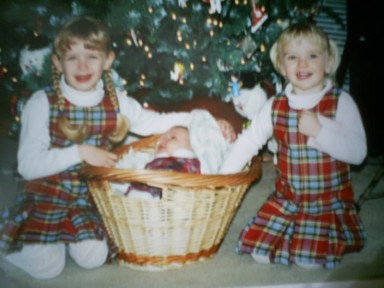
 Mariel was glad to have someone small to cuddle...
 Triss kept her entertained...
 And she entered into all of our amusements~ in her own unique way.
 She has a style all her own!
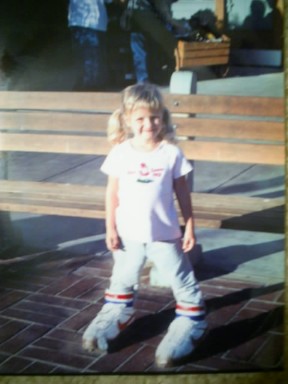 Although sometimes she feels the shoes she must fill are awfully big...
  It's tiring being the youngest,
 But with a smile and some pixie dust, she carries it off.